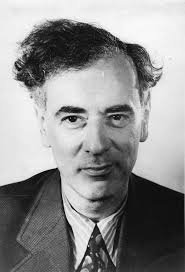
Baku, 1908
Lev Davidovich Landau was born on 22 January 1908 in Baku, into an educated Jewish family. His father, David Landau, was an engineer in the city’s booming oil industry; his mother, Lyubov, was a physician. Lev was a mathematical prodigy — he later joked that he “could not remember a time when he was not proficient at differentiation and integration.” He finished secondary school at thirteen and entered Baku State University at fourteen, studying in two faculties at once.
In 1924 he moved to Leningrad University, the centre of Soviet physics, and graduated in 1927 at nineteen, already publishing original work.
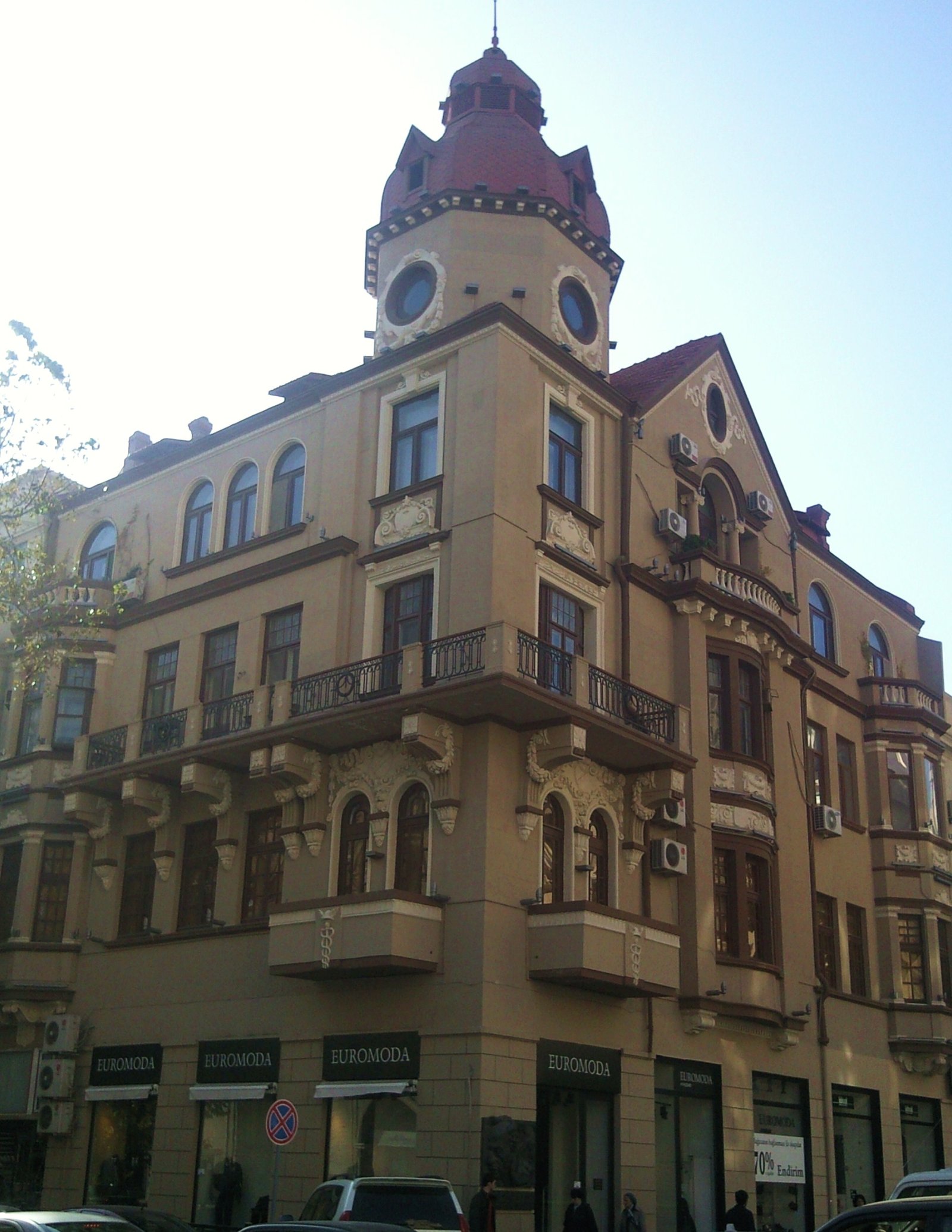
Europe — and Bohr
Between 1929 and 1931 a Rockefeller and Soviet fellowship sent Landau across the great laboratories of Europe — Göttingen, Leipzig, Cambridge near Dirac, Zürich with Pauli. But the decisive stop was Copenhagen and Niels Bohr. Landau attended Bohr’s seminars three times and for the rest of his life called Bohr the only teacher he ever had.
It was in this period, at just twenty-two, that he produced the quantum theory of electron diamagnetism — the discovery of what are now called Landau levels.
Kharkiv: the theoretical minimum
From 1932 Landau headed theory at the Ukrainian Physico-Technical Institute in Kharkiv. There he began two of his lasting creations: with Evgeny Lifshitz, the monumental Course of Theoretical Physics, and the fearsome “theoretical minimum” — a set of exams covering the whole of physics that a student had to pass before working with him. In thirty years only forty-three people did.
Here too, in 1937, he produced his theory of phase transitions — before politics caught up with him.
1938: a year in the Lubyanka
In April 1938, now in Moscow at Pyotr Kapitsa’s institute, Landau helped draft an anti-Stalin leaflet that compared Soviet Stalinism to German fascism. He was arrested by the NKVD and held for almost exactly a year in the Lubyanka prison, where he was nearly broken physically.
He was saved by an act of extraordinary courage. Kapitsa wrote directly to Stalin, then to Molotov, personally vouching for Landau and threatening to resign from science if he were not freed; Niels Bohr also wrote to the Kremlin. In April 1939 Landau was released into Kapitsa’s personal custody.
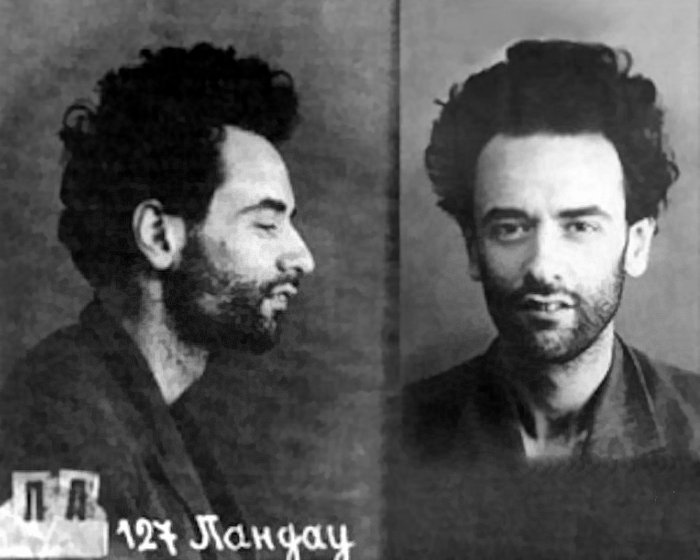
Sources give the arrest as 27–28 April 1938 and the release as 28–29 April 1939 (“almost exactly one year”). The leaflet was co-written with the physicist Moisey Korets.
Moscow and superfluidity
Back at the Institute for Physical Problems, Landau turned to the strangest fact in Kapitsa’s laboratory: below 2.17 K, liquid helium flows with zero viscosity. In 1941 he explained it — and the work would, two decades later, win him the Nobel Prize. Through the 1940s and 50s came a torrent of further results, from plasma physics to the theory of superconductivity to the Soviet bomb project.
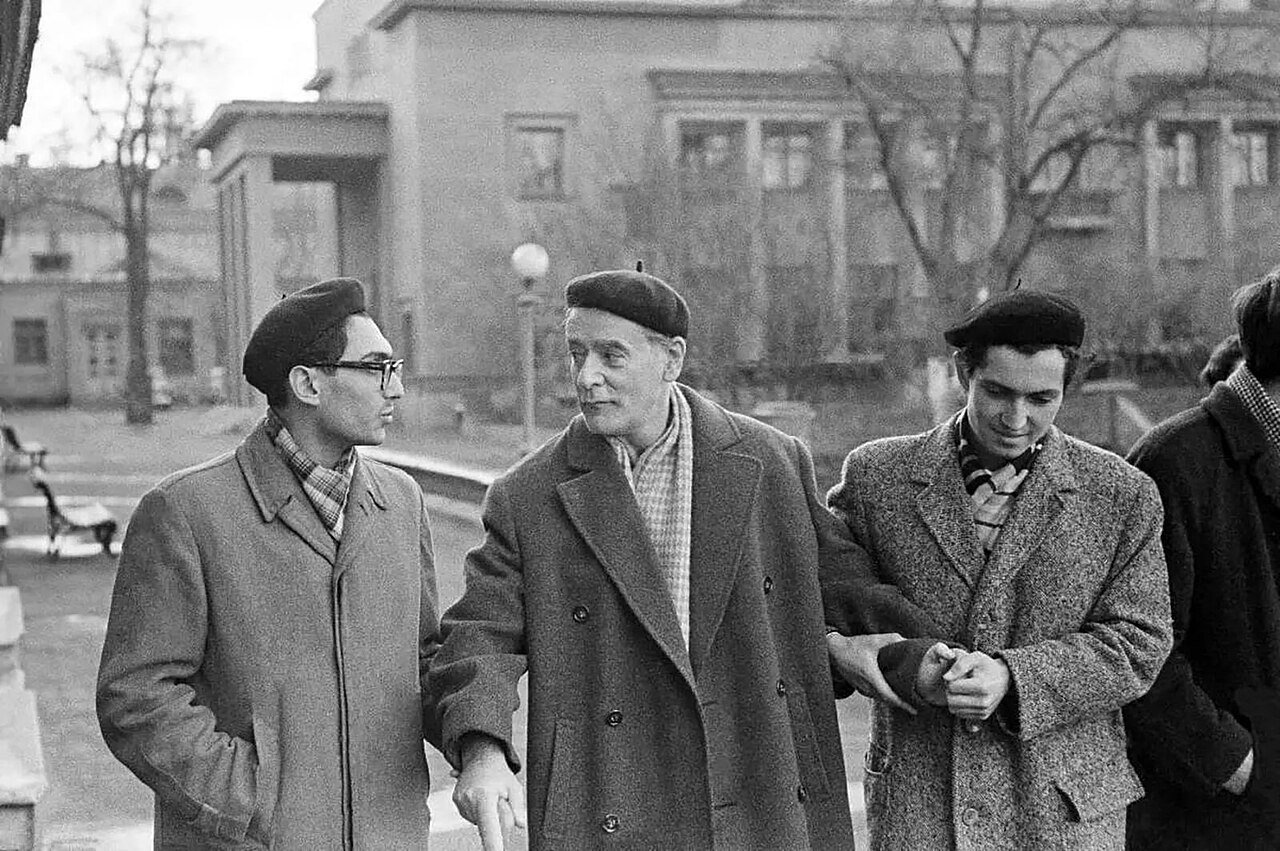
“Dau”
Landau detested pomposity. He divided physics into “alive” and “dead”, ranked physicists on a half-joking logarithmic scale, and preached a “formula of happiness” built on work, love and friendship. An avowed atheist and a famous wit, he insisted that gloom and self-importance were the real enemies of a good life. His views on marriage were as unconventional as his physics — he proposed to his wife Kora a deliberately open “pact”.
To be happy, a person needs three things: work that one loves, another person to love, and the company of others. Lev Landau
1962: the road to Dubna
On 7 January 1962, on the road toward Dubna, the car carrying Landau was struck head-on by a truck. His injuries were catastrophic; he lay in a coma for weeks and was declared clinically dead more than once. An international effort flew in specialists and rare drugs from across the world, and he survived — but his creative life as a physicist was over.
Later that year the Nobel Committee broke with tradition: unable to travel to Stockholm, Landau received the 1962 Nobel Prize in Physics from the Swedish ambassador, in a Moscow hospital. He lived another six years, never fully recovering, and died on 1 April 1968. He is buried at Novodevichy Cemetery in Moscow.